

 7 min read
 Cozy Hostel in Tula
Packing the right things is half the battle for a successful trip. When you stay at a hostel, the list of essentials is quite different from what you would bring to a hotel or a resort. A hostel is a shared space where compactness, the security of your belongings and respect for fellow guests really matter. We have put together a detailed checklist based on the experience of thousands of guests who have stayed at our hostel Cozy Hostel in Tula in Tula.
Every traveller has faced the moment when something crucial was missing at the worst possible time: a phone charger, earplugs in a noisy room, or a padlock for the locker. These seem like small things, yet they can ruin the impression of an entire trip. A hostel is a type of accommodation that calls for a special approach to packing. There will be no private bathroom with a bathrobe and slippers, but there will be a vibrant atmosphere, new friends and a sense of real adventure. The only question is how well prepared you are for it.
According to our hostel statistics, more than 40% of guests forget at least one important item, while 15% admit they bring too much. Both situations cause inconvenience. Our checklist will help you strike the perfect balance: pack everything you need without overloading your backpack.
 Documents and Money
Documents are what you absolutely cannot check in without. In Russia, a passport is required when checking into any accommodation facility. But a passport alone is not enough -- you should also prepare for unexpected situations.
Essential document checklist:
- Passport (original). Check-in is impossible without it. Verify the expiry date in advance -- if it is due for renewal within a month, it is better to get a new one before the trip. Foreign nationals will need their international passport and a migration card.
- Copies of documents. Make a paper copy of the main page and the registration page of your passport, and also photograph them on your phone. If your passport gets lost, copies will greatly speed up the replacement process.
- Health insurance. For domestic travel in Russia, carry your compulsory medical insurance (OMS) policy. If you are travelling far from home, consider additional travel insurance: it costs from 30 roubles per day and covers emergency medical treatment, evacuation and lost luggage.
- Bank cards. Take at least two cards from different banks and store them separately. If one gets blocked or demagnetised, the other will save you. Link your cards to mobile banking and enable transaction notifications.
- Cash. Not everywhere accepts cards, especially in smaller cities. Bring cash at a rate of 500-1,000 roubles per day for small expenses: transport, street food, souvenirs. Spread your money across different pockets and places.
- Emergency contacts. Write down on paper (not just in your phone!) the numbers of close relatives, the embassy number (if you are a foreign national), your bank's hotline and your hostel booking reference.
Tip: keep original documents in a waist pouch or in the locked locker at the hostel. Never leave your passport on the bedside table or in an unlocked backpack -- even in the most trustworthy hostels, reasonable caution never hurts.
 Hygiene and Personal Items
Showers in a hostel are shared, which means you need your own set of toiletries and a convenient way to store and carry them. Many first-time travellers overestimate what the hostel provides and underestimate how important small things like shower flip-flops really are.
A microfibre towel is your best friend. A regular terry towel takes up half your backpack, weighs 800 grams and takes a full day to dry. A microfibre towel measuring 60x120 cm folds down to the size of your palm, weighs 200 grams and dries in 2-3 hours. Such a towel costs between 300 and 800 roubles but will last for dozens of trips. At Cozy Hostel in Tula we provide towels free of charge, but not all hostels do.
Shower flip-flops. This is not a whim but a matter of hygiene. In a shared shower used by dozens of people, rubber flip-flops protect you from fungal infections and simply unpleasant sensations. The simplest EVA flip-flops weigh practically nothing and will do the job. You can also use them in the room to avoid walking barefoot.
Toiletry bag (travel wash bag). Buy a waterproof bag with a hook -- you can hang it on the shower door. Inside should be: a toothbrush with a cap, mini toothpaste (up to 50 ml), shampoo in a travel bottle, shower gel, deodorant, a razor and wet wipes.
What hostels usually provide:
- Bed linen (almost always free of charge)
- Soap dispensers in the showers (not always)
- A hairdryer (usually available on request at reception)
- Toilet paper in the bathrooms
What hostels usually do NOT provide:
- Towels (or they charge 50-150₽ extra)
- Shampoo, shower gel, toothpaste
- Slippers, bathrobes
- Shaving supplies

 Sleeping Comfort
Sleep in a hostel is the number one concern for newcomers. In a room with 4-8 people, someone will inevitably snore, rustle plastic bags at 3 a.m. or get up for an early flight. This is a normal part of hostel life, and you need to be prepared for it.
Earplugs are the single most important item on the necessity scale. Silicone or foam earplugs cost between 50 and 300 roubles and will improve your sleep quality tenfold. Reusable silicone earplugs are more comfortable: they are softer, fit more snugly and do not fall out at night. Foam earplugs are cheaper and more widely available -- you can buy them at any pharmacy. We recommend always having at least two pairs with you, in case you lose one.
Sleep mask. In a shared room, someone may turn on the light at any time -- to grab their things, pack for an early bus, or check their phone. A sleep mask completely blocks out light and helps you fall asleep even with the overhead lights on. Choose one with an adjustable strap and a soft lining -- it should not press on your eyes.
Travel pillow. This item is optional: most hostels provide pillows. But if you are sensitive to pillow firmness or height, a compact inflatable pillow weighing 80 grams can be a lifesaver. It is also convenient to use on the train or bus on the way.
Why the bottom bunk is better. When booking a hostel, choose the bottom bunk of a bunk bed whenever possible. There are several reasons: it is easier to get in and out of at night, you do not need to climb a ladder half asleep, and it is simpler to organise your space -- you can place your backpack next to you and hang things on the bed frame. Also, the bottom bunk is usually cooler: warm air rises, and in summer the top bunk can be stuffy.
Life hack: if you want to create a sense of privacy, bring a lightweight cotton scarf or sarong and hang it from the bed frame as a curtain. Many experienced hostellers do this, and it does not violate the rules of most hostels.
 Electronics and Gadgets
In modern travel, a smartphone replaces your map, guidebook, translator, bank and camera. A dead phone means lost tickets, an inability to pay for purchases and complete disorientation in an unfamiliar city. Make sure your gadgets are always charged.
Charger and cable. Take the original charger -- cheap knock-offs can take hours instead of minutes to charge your phone. If you have several devices, buy a charger with two or three USB ports -- it saves space and lets you charge everything at once. In hostels there are always fewer power outlets than guests, so a compact extension lead with 3-4 sockets can be your ace in the hole and a great way to make friends in the room.
Power bank (portable charger). A capacity of 10,000 mAh provides 2-3 full smartphone charges. That is enough for a full day of walking with navigation and photography. Charge the power bank overnight at the hostel and use it while out during the day. Note: when flying, the power bank must go in your hand luggage -- it is prohibited in checked baggage.
Universal power adapter. If you are travelling outside Russia, a universal adapter is essential. But even within Russia it can come in handy: older buildings sometimes have Soviet-style outlets that will not accept a Euro plug. A compact adapter weighs 50 grams and costs from 200 roubles.
Headphones. In a hostel, headphones are not a luxury but a survival tool. Want to watch a video before bed? Listen to a podcast in the morning? Drown out a neighbour's snoring? Without headphones, it is impossible to do any of this without disturbing others. If your budget allows, get noise-cancelling headphones (ANC). They work like next-generation earplugs: they not only play music but also cut out ambient noise. Even budget models with basic ANC for 2,000-3,000 roubles will significantly improve your quality of life in a hostel.

 Keeping Your Belongings Safe
A hostel is an open space with dozens of strangers. The vast majority of guests are honest and decent travellers, but you still should not leave valuables unattended. Basic precautions take up very little space or money, yet they will save you from unpleasant surprises.
Padlock for the locker. Most hostels have individual lockers, but you need to bring your own padlock. This is the single most important security item in your backpack. Buy a reliable padlock: a combination lock is more convenient (you cannot lose the key), but a keyed lock is more secure. Some hostels sell locks at reception for 200-400 roubles, but the price is inflated and the selection is limited. It is better to buy one in advance. At Cozy Hostel in Tula, every guest has access to a personal locker -- all you need is your own padlock.
Waist pouch (belt bag) or hidden wallet. When you go out for a walk, do not take all your money and documents with you. Leave the bulk in your locker, and carry only your daily budget and a copy of your passport. A waist pouch that hides under your clothing is the ideal solution. It holds your phone, a card, a bit of cash and the key to your lock.
Cable lock for your backpack. If your backpack does not have a rigid frame, a cable lock helps you fasten it to the bed frame or a radiator. It is not absolute protection, but it is a serious deterrent. A lightweight cable lock one metre long weighs about 100 grams and costs from 300 roubles.
General hostel security rules:
- Never leave your laptop, phone or wallet on the bed unattended
- Use the locker even for small items -- the habit of locking things away should be automatic
- Do not flaunt expensive gadgets or large sums of money
- If something goes missing -- report it to reception immediately; hostels often have CCTV cameras
 Useful Extras
There are things you can manage without, but with them hostel life becomes noticeably more comfortable. They weigh almost nothing, take up minimal space, yet prove invaluable at just the right moment.
Reusable water bottle. Almost every hostel has a water cooler or a filtered water tap. A 0.5-0.7 litre bottle lets you refill for free instead of buying plastic bottles. Over a week of travelling you will save 500-700 roubles and reduce waste.
Snacks for the first hours. Nuts, energy bars, dried fruit -- compact and calorific foods that will save you if you arrive late at night and the nearest shop is already closed. Tea bags or instant coffee sachets are also handy: the shared kitchen at a hostel usually has a kettle and mugs.
Travel clothesline. An elastic cord with hooks, 1-2 metres long, lets you dry clothes right in the room or bathroom. It costs 100-200 roubles and weighs 30 grams. Especially useful if you are travelling for more than 3-4 days and washing clothes by hand.
Zip-lock bags. A universal item: you can store wet clothes, dirty laundry, documents (waterproofing), and small objects that get lost in your backpack. Take 5-10 bags of different sizes -- you will definitely use them.
Torch or headlamp. When you need to find things in a dark room without waking anyone, your phone torch is not the best option (too bright). A small headlamp with a red-light mode is ideal: it emits a soft glow, does not blind those around you and leaves your hands free.
 What NOT to Bring
Knowing what to leave behind is just as important a skill as knowing what to take. A heavy backpack means back pain, fatigue and irritation. Every extra kilogram in your backpack takes away from the enjoyment of your trip. Here is what you should definitely leave at home.
Too many clothes. This is the most common mistake newcomers make. For a 3-5 day trip, 2-3 outfits plus one spare set is enough. Wash clothes on the road -- many hostels have a washing machine, and small items can be hand-washed. Choose quick-drying synthetic fabrics: they are lighter than cotton and dry overnight.
Expensive jewellery and designer accessories. Gold chains, luxury watches, branded handbags -- all of these attract unwanted attention and create unnecessary stress. Travel is not a fashion show. Leave valuables at home and take simple, practical clothing.
Bulky items. Large towels, full-size pillows, paper books (take an e-reader instead), full-size shampoo bottles (decant into travel containers). Every cubic centimetre of your backpack counts.
Golden rule: if you are unsure whether you need something -- do not take it. Almost everything can be bought on the spot, but there is no way to lighten your backpack once you are on the road.
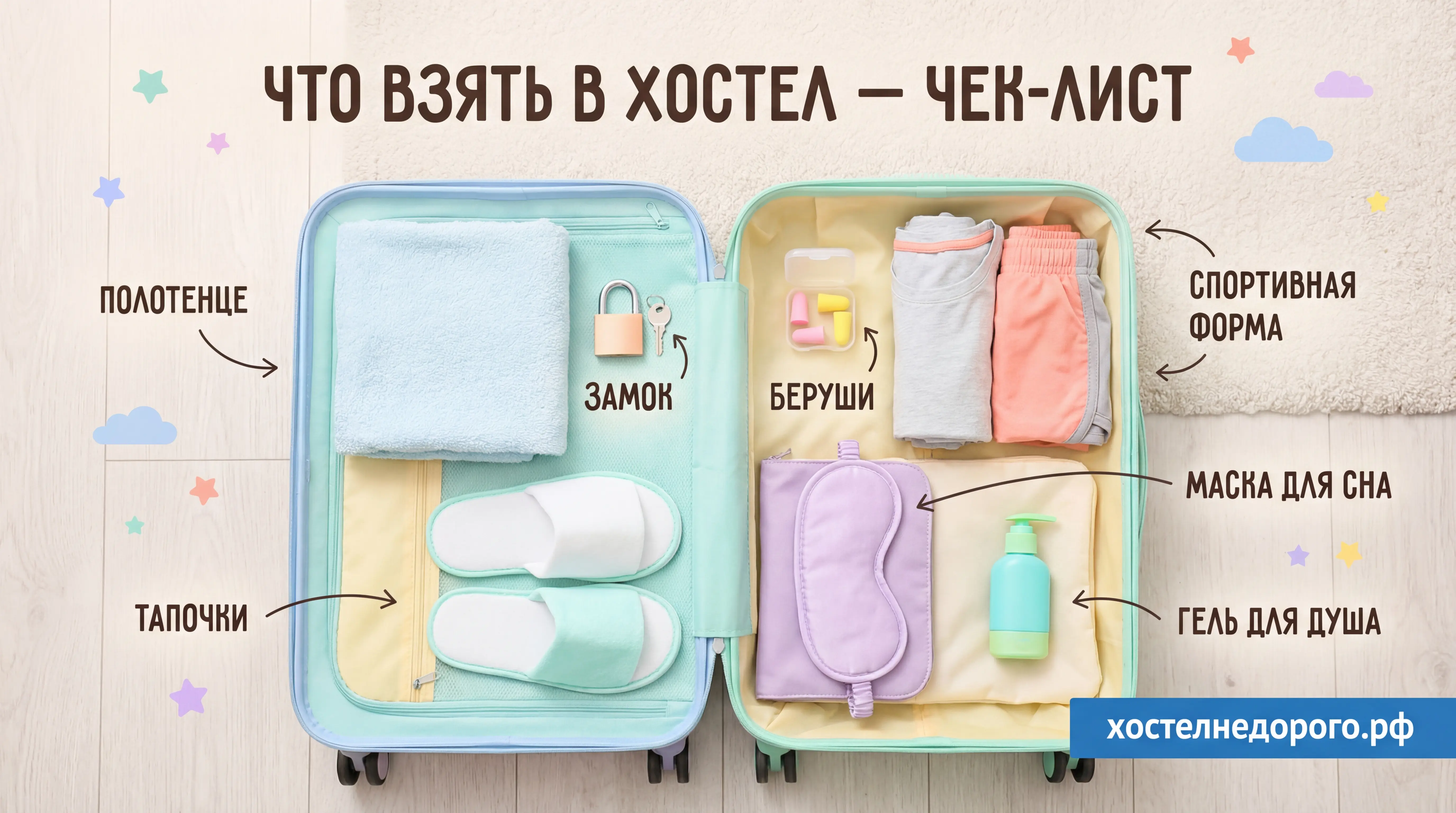
Complete Checklist
| Category | Item | Essential? |
|---|---|---|
| Documents | Passport + copy | ✓ Yes |
| Documents | Bank cards (2 pcs.) | ✓ Yes |
| Hygiene | Microfibre towel | ✓ Yes |
| Hygiene | Shower flip-flops | ✓ Yes |
| Hygiene | Toiletry bag | ✓ Yes |
| Sleep | Earplugs | ✓ Yes |
| Sleep | Sleep mask | Recommended |
| Electronics | Charger + power bank | ✓ Yes |
| Electronics | Headphones | ✓ Yes |
| Security | Padlock for locker | ✓ Yes |
| Security | Waist pouch | Recommended |
| Extras | Water bottle | Recommended |
| Extras | Zip-lock bags | Recommended |
| Do not bring | Expensive jewellery | ✗ No |
| Do not bring | Too many clothes | ✗ No |
| Do not bring | Bulky items | ✗ No |
Book Cozy Hostel in Tula hostel -- we have everything you need!
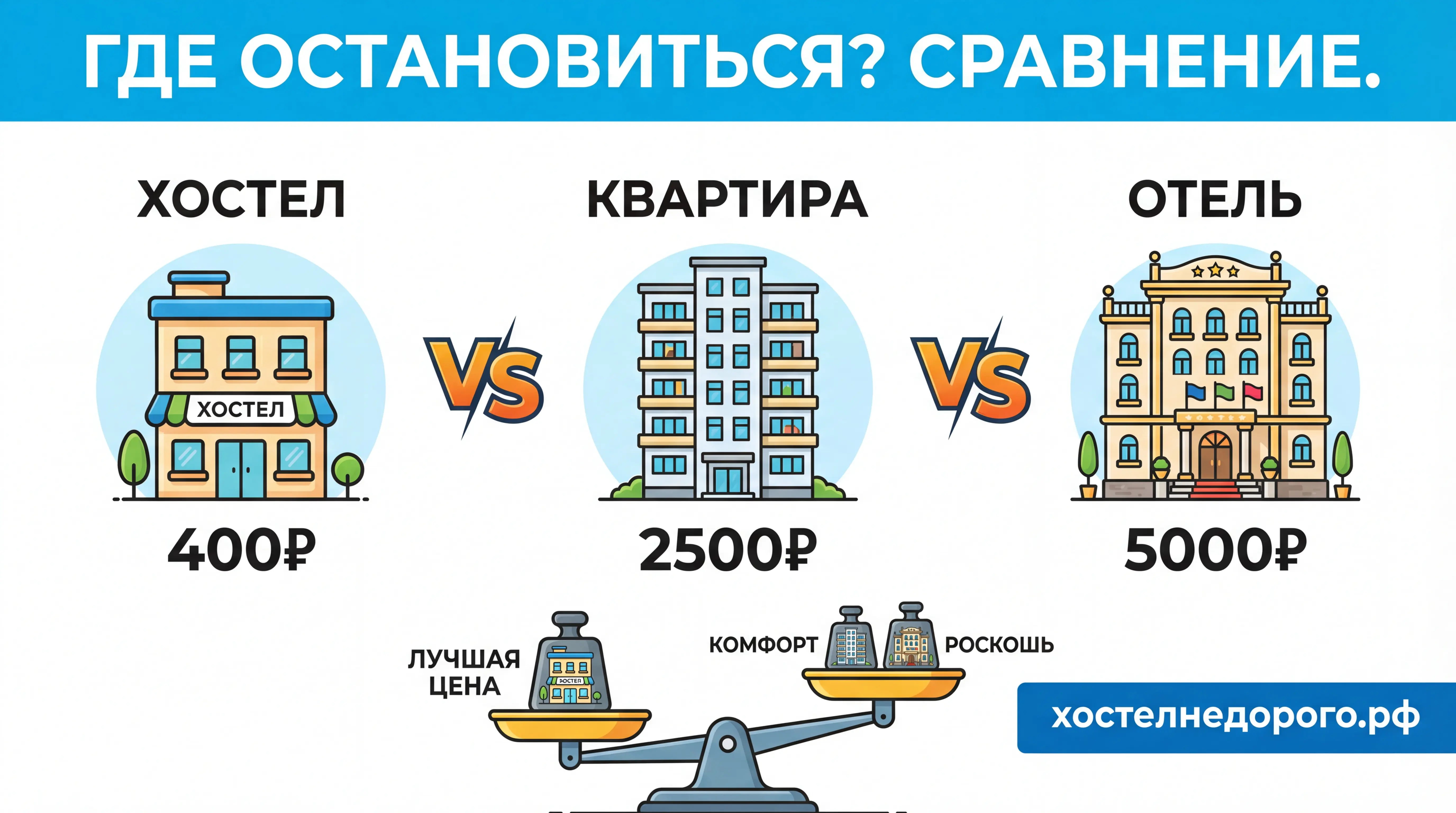
Clean linen, towels, Wi-Fi, kitchen, lockers, daily cleaning -- all included from 400₽/night. Just pack the essentials and we will take care of the rest.
 Frequently Asked Questions
Yes, the vast majority of hostels include bed linen in the room rate. At Cozy Hostel in Tula hostel, every guest receives a clean set upon check-in: a fitted sheet, duvet cover and pillowcase. Linen is washed in an industrial washing machine at high temperature and ironed. It is changed every 5-7 days or upon request. A few ultra-budget hostels may charge 100-200 roubles for a set, but that is the exception rather than the rule. If in doubt, check when booking.
We always recommend having your own towel. Roughly half of hostels in Russia do not provide towels for free: some offer them for hire at 50-150 roubles, while others do not have them at all. At Cozy Hostel in Tula, towels are provided free of charge, but this is not standard practice across the industry. The best option is a compact microfibre towel: it takes up minimal space, dries quickly and will come in handy not only at a hostel but also at the beach, in a sauna or after getting caught in the rain. Cost: from 300 roubles; weight: about 200 grams.
Good hostels provide individual lockers in every room. A typical locker is large enough for a medium-sized backpack, a laptop and documents. At Cozy Hostel in Tula, each guest has a personal metal locker that can be secured with a padlock. An important point: you need to bring your own lock. Some hostels sell locks at reception (200-400 roubles) or offer electronic locks with a PIN code. We strongly recommend bringing a lock from home -- it is cheaper and you can be sure of its quality.
 You May Also Like