

 8 min read
 Cozy Hostel in Tula
Traveling across Russia is becoming increasingly popular, and hostels have long ceased to be synonymous with discomfort. A modern hostel is not just a place to sleep -- it is a full-fledged space for living, working, and connecting with like-minded people. However, the quality of hostels varies greatly: one can give you the best memories of your trip, while another can ruin your entire vacation.
If you are planning a trip to Tula -- a city with a rich history, famous gingerbread, samovars, and a stunning Kremlin -- the question of choosing accommodation becomes especially important. Tula attracts more and more tourists every year: there is plenty to see, places to visit, and things to do. This means the demand for affordable and comfortable lodging is only growing.
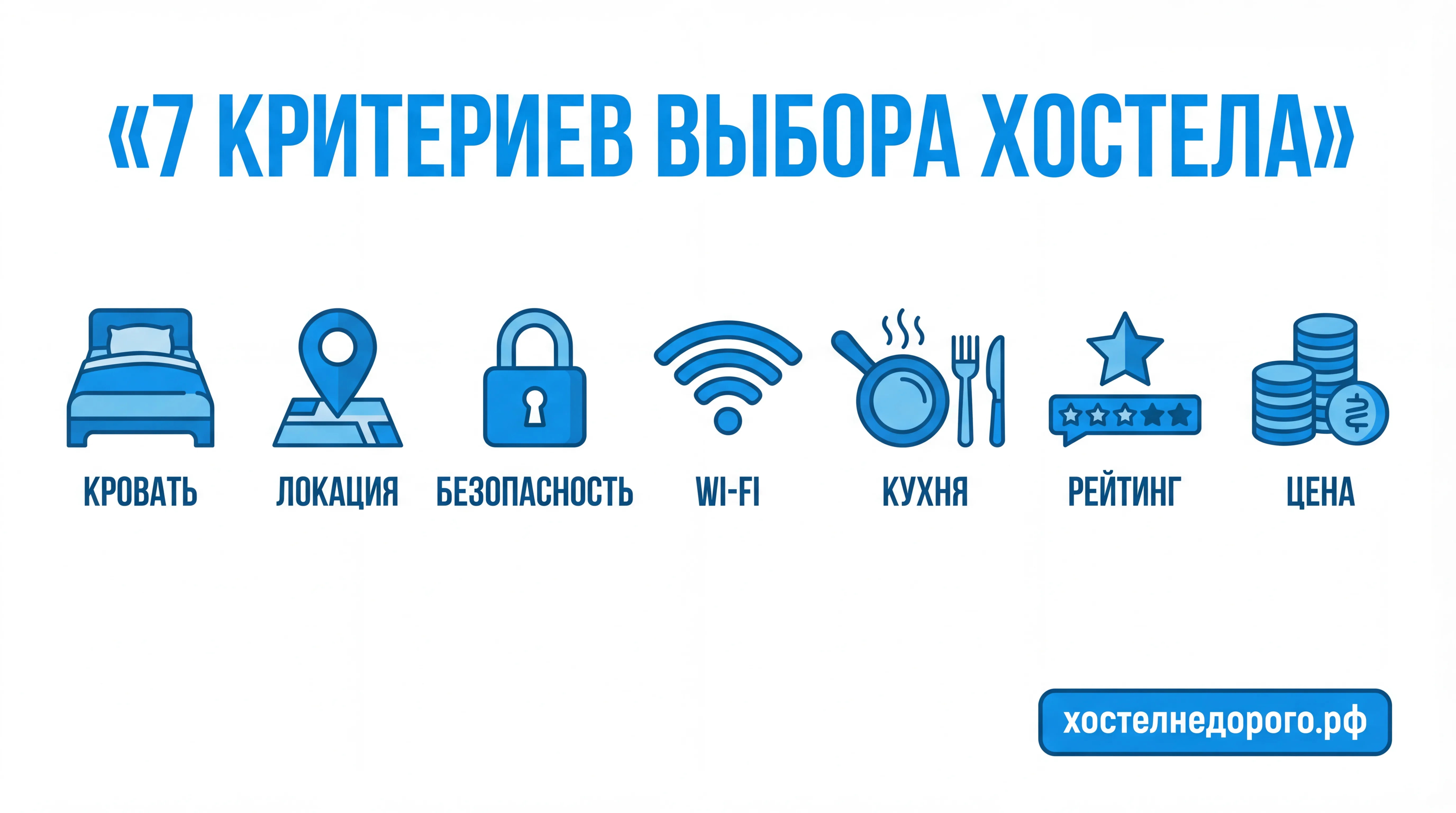
We have compiled 7 key criteria that will help you choose a great hostel with confidence -- whether in Tula, Moscow, Saint Petersburg, or any other city. These tips are based on real experience of running a hostel and hundreds of reviews from our guests. Read the article to the end, and you will know exactly what to look for when booking.
 Criterion 1: Location
Location is arguably the most important factor when choosing a hostel. Even the most luxurious hostel on the outskirts of a city can turn your trip into endless commutes, and time is the most precious resource when traveling.
The ideal hostel is within walking distance of the city center and main attractions. This allows you to save on transportation, walk more, and truly soak in the atmosphere of the city. Moreover, a central location usually means proximity to cafes, restaurants, shops, and entertainment.
In Tula, for example, a hostel within a 10-minute walk from the Kremlin is the gold standard. From there, you can walk to the Tula State Museum of Arms, Belousov Park, the Upa River embankment, and the famous Tula Gingerbread Museum. The Karl Marx Street area is one of the best neighborhoods to stay in: quiet, safe, and right in the heart of the city.
What to pay attention to when checking the location:
- Open the map and measure the distance to key attractions. If the nearest one is more than a 30-minute walk away, you should look for something closer.
- Check transport accessibility: are there public transport stops, a train station, or a bus terminal nearby?
- Study the neighborhood on Google Maps or Yandex Maps: look at street panoramas, assess the infrastructure -- are there grocery stores, pharmacies, and ATMs nearby?
- Read reviews specifically about the location -- guests often write about how convenient it was to get from the train station and to the sights.
Remember: saving 200-300 rubles per night on a hostel in the suburbs can result in taxi expenses that exceed the price difference. Choose your location wisely!
 Criterion 2: Cleanliness and Freshness
Cleanliness is what separates a good hostel from a mediocre one. Regardless of budget, every guest deserves clean bed linen, fresh towels, and tidy common areas. Fortunately, you can assess the cleanliness level before checking in.
The first thing to look at is photos. Professional hostels post high-quality photos of rooms, bathrooms, the kitchen, and common areas. If there are few photos, they are blurry, or obviously outdated -- that is a reason to be cautious. Pay attention to the corners of rooms, the condition of mattresses, and any stains on walls and ceilings.
Second -- reviews. Look for reviews where guests mention cleanliness. Phrases like "fresh linen," "clean showers," and "regular cleaning" indicate a good hostel. Words like "dirty," "smell," "cockroaches," or "mold" are obvious red flags, even if such a review is one out of ten.
Signs of a clean hostel:
- Linen is changed at every check-in, not "upon request"
- Showers and toilets are cleaned at least twice a day
- There are no dirty dishes or dried stains in the kitchen
- Rooms have no unpleasant odors
- Trash bins are emptied regularly
Do not hesitate to ask to see the room before checking in if you are booking in person. A good hostel will gladly give you a tour -- it has nothing to hide.

 Criterion 3: Security
Security is one of the main concerns for people choosing a hostel for the first time. And this is perfectly normal: you will be sleeping in the same room with strangers, and your belongings need to be safe. Fortunately, modern hostels take security seriously.
Individual lockers (lockable cabinets) are an essential element of a good hostel. You can store your documents, money, electronics, and valuables in them. Some hostels provide locks for free, while others require you to bring your own -- check in advance. The best hostels place lockers right next to the bed so you can secure your belongings without getting up.
What to pay attention to:
- CCTV surveillance in common areas -- hallways, kitchen, entrance area. Cameras in bedrooms, of course, should not be present.
- Electronic locks or key cards on the front door and room doors. This ensures that unauthorized people cannot get in.
- 24-hour reception desk or a duty administrator. If the hostel closes at night without staff -- that is a serious risk.
- Fire safety: smoke detectors, fire extinguishers, evacuation plans. A serious hostel does not cut corners on this.
- Good lighting in hallways and on the surrounding grounds, especially after dark.
A useful tip: before booking, ask the hostel directly about their security measures. A professional establishment will respond quickly and in detail. If there is no answer or it is evasive -- that is a reason to reconsider.
 Criterion 4: Wi-Fi and Power Outlets
In 2026, stable internet is not a luxury but a basic necessity. You need Wi-Fi for navigating the city, booking tickets, staying in touch with family, and possibly working remotely. That is why the quality of internet at a hostel is a critically important factor.
Free Wi-Fi is advertised by virtually every hostel, but the speed and stability can differ dramatically. In one hostel you might comfortably hold video calls, while in another even a messenger app will lag. It is difficult to check the real speed in advance, but reviews help: freelancers and remote workers usually write about the internet in detail.
A separate topic is power outlets near the bed. This may seem like a minor thing, but in practice it is one of the most common complaints. If there is one outlet for six people -- your phone may never fully charge overnight. A good hostel provides each sleeping spot with its own outlet, and the best ones also include a USB port.
What to check:
- Is there a power outlet at each bed
- Does the Wi-Fi work reliably in all areas of the hostel
- Is there a dedicated work area (coworking space) with good internet
- Is Ethernet access available for those who need critical speed
If you plan to work remotely from a hostel, be sure to clarify this before booking. Not all hostels cater to digital nomads, but the best ones actively attract this audience.
 Criterion 5: Kitchen and Common Areas
A shared kitchen is one of the main advantages of a hostel over a hotel. The ability to cook your own food saves significant money: breakfast at a cafe costs 300-500 rubles, while homemade oatmeal with fruit costs about 50. Over a week, the difference adds up.
A good hostel kitchen is not just a stove and a sink. It is a fully equipped space with a refrigerator, microwave, kettle, dishes, cutlery, and enough counter space. The best hostels even have toasters, blenders, and coffee machines. Dish soap and sponges should also be available.
The kitchen in a hostel is also a social space. This is where friendships between travelers most often begin. Cooking dinner together can become one of the brightest memories of your trip. Many hostels organize special cooking evenings where guests prepare dishes from their national cuisines.
Common areas are equally important:
- Lounge or living room with comfortable sofas -- a place to read a book, watch a movie, or simply relax
- Work area with tables and chairs -- for those who need to work on a laptop
- Recreation area with board games, books, a guitar -- creates a friendly atmosphere
- Laundry room with a washing machine -- indispensable for long trips
- Clothes drying area -- especially important during the off-season
Before booking, study the photos of the kitchen and common areas. If there are none -- that is a warning sign: the hostel may have nothing to be proud of in this regard.

 Criterion 6: Reviews
Reviews are your most reliable helper when choosing a hostel. No photos or descriptions on a website can tell the truth like the real experience of other travelers. But you need to read reviews wisely, too.
Where to look for reviews:
- Yandex Maps and Google Maps -- regular users leave reviews here, and they are harder to fake
- Booking.com and Ostrovok.ru -- only those who actually booked and stayed can leave reviews
- 2GIS -- a good source for regional hostels
- Telegram channels and traveler community groups
- Otzovik and iRecommend -- often contain detailed reviews with photos
What to pay attention to in reviews:
- Overall rating: look for a score of 4.5 and above. If the rating is below 4.0 -- there are likely systemic problems.
- Freshness of reviews: a three-year-old review says little about the current state of the hostel. Focus on the last 3-6 months.
- Detail level: short reviews like "it was ok" or "didn't like it" are not informative. Look for detailed descriptions from experienced travelers.
- Recurring themes: if several guests complain about the same issue (noise, dirt, rude staff) -- it is a real problem, not a coincidence.
What you can ignore: isolated negative reviews from accounts with no photos and a single review -- these may be competitors. Also, do not overvalue complaints like "someone snored in the shared room" -- that is a format-specific issue, not the hostel's fault.
 Criterion 7: Price
Price is an obvious criterion, but the key here is not just to look for the cheapest option -- it is to evaluate the value for money. A hostel for 200 rubles with no hot water and no Wi-Fi will end up costing you more than a hostel for 500 rubles with a full set of amenities.
What is usually included in the price:
- A bed with clean bed linen
- Access to a shared kitchen and bathrooms
- Wi-Fi
- Basic amenities (towel, soap, shampoo -- not in all hostels)
What may cost extra:
- Towel and slippers (50-100 rubles)
- Late check-out (200-500 rubles)
- Laundry (100-200 rubles per load)
- Hair dryer or iron rental
- Luggage storage after check-out
Before booking, be sure to clarify what is included in the price and what is not. Some hostels attract customers with low prices but then charge for every little thing. An honest hostel lists all conditions transparently.
Price comparison for Tula (2026):
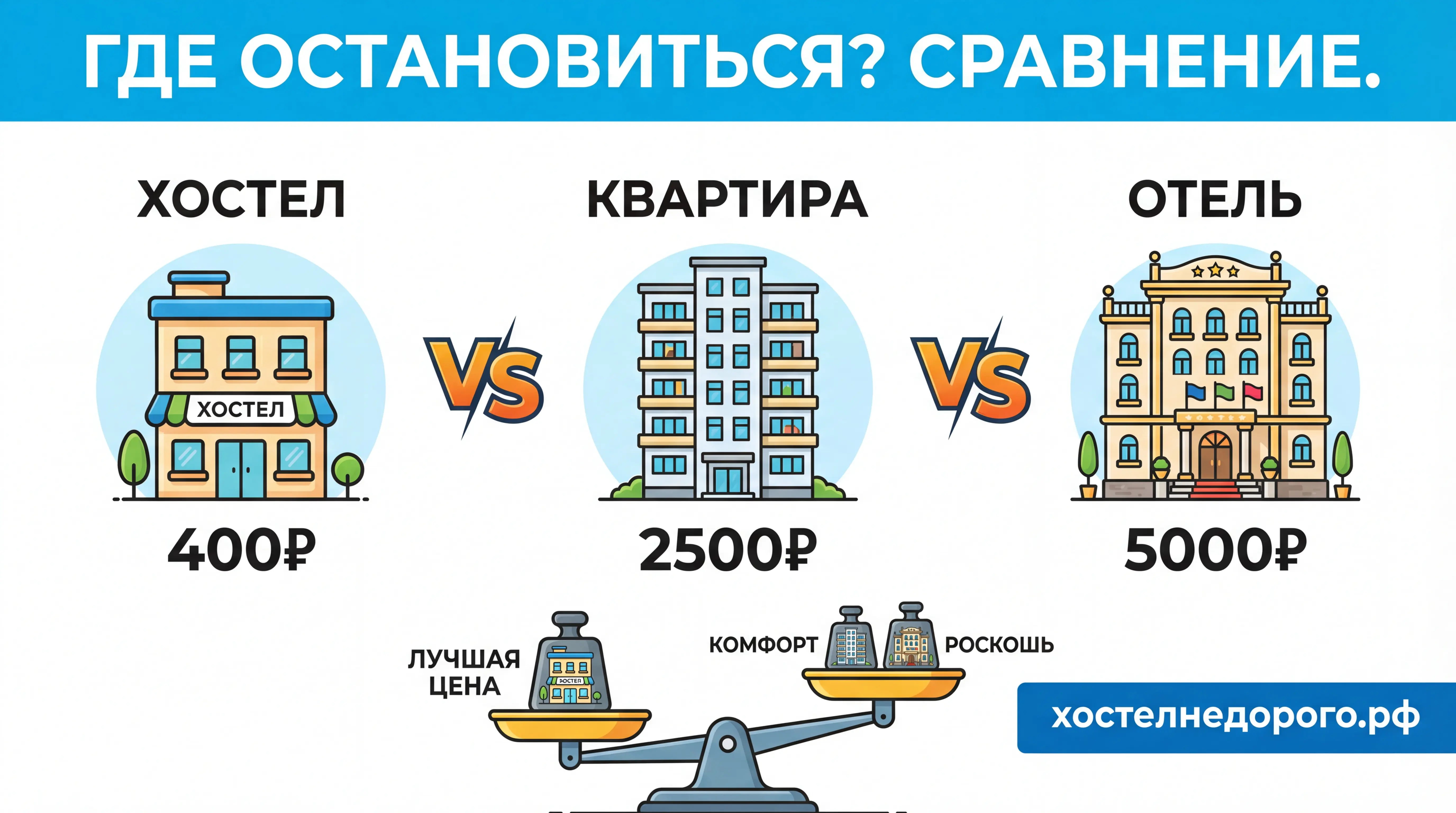
- Hostel, bed in a shared room: 400-700 rubles/night
- Hostel, semi-private room: 600-1,200 rubles/night
- Budget hotel: 2,000-3,500 rubles/night
- Mid-range hotel: 3,500-6,000 rubles/night
- Short-term apartment rental: 1,500-3,000 rubles/night
As you can see, a hostel is the most economical option. And for long-term stays (a week or more), many hostels offer discounts of up to 20-30%, making the price even more attractive.
| Criterion | What to Look For | Red Flag |
|---|---|---|
| Location | Proximity to the center, transport, and attractions | Hostel on the outskirts with no transport nearby |
| Cleanliness | Fresh linen, clean bathrooms, regular cleaning | No photos, complaints about smell and dirt |
| Security | Lockers, cameras, electronic locks, 24/7 reception | No lockers, no CCTV, open entrance |
| Wi-Fi | Stable internet, power outlet at each bed | Wi-Fi only at reception, one outlet per room |
| Kitchen | Full equipment, cleanliness, refrigerator, dishes | Kitchen exists only on paper, no appliances, dirty dishes |
| Reviews | Rating 4.5+, recent detailed reviews with photos | Rating below 4.0, recurring complaints |
| Price | Transparent conditions, all-inclusive, discounts | Hidden fees, suspiciously low price |
Book hostel Cozy Hostel in Tula from 400₽/night
All 7 criteria -- checked! Central Tula, cleanliness, security, Wi-Fi, kitchen, excellent reviews.
 Frequently Asked Questions
 Read Also